


Introduction
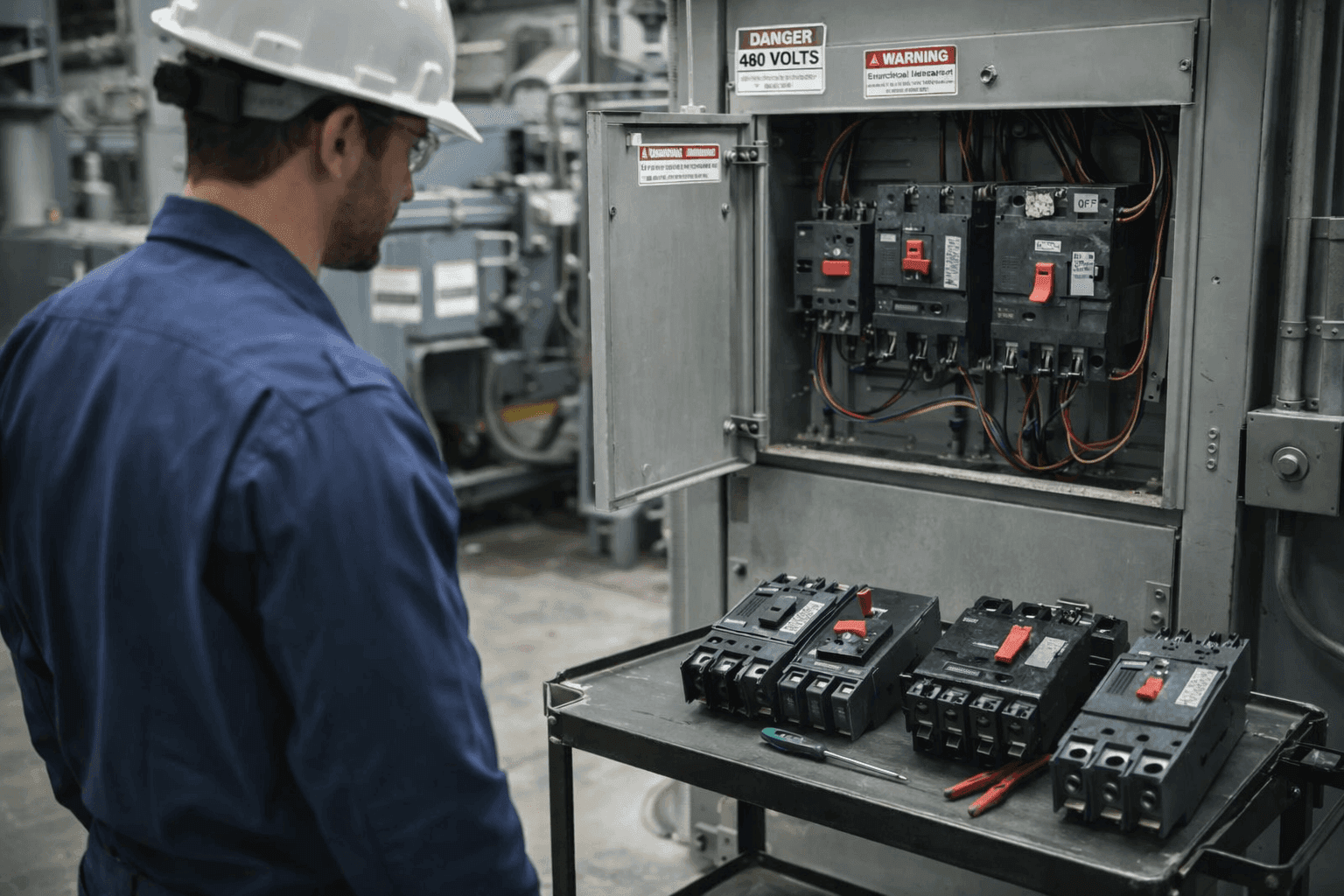
Few things disrupt operations like discovering that a criticalindustrial electrical part has been discontinued. Whether it's a contactor, overload relay,bus plug, orcircuit breaker, dealing with obsolescence requires more than a quick swap — it demands strategic action. You’re faced with balancing safety, compliance, budget, and operational uptime — all while trying to source parts that no longer exist in OEM catalogs.
This is where knowing yourobsolete industrial electrical parts solutionsbecomes a game-changer. From sourcing aftermarket alternatives to evaluating backward compatibility and leveraging trusted suppliers, this blog will show you how to avoid costly downtime and future-proof your system — even when the original part is long gone.
TLDR - Quick Guide
- Obsolete parts are no longer manufactured or supported by the OEM, but reliable aftermarket options often exist.
- Identify specs from nameplates, catalogs, or photos to cross-reference suitable replacements.
- Suppliers likeBRAH Electricoffer direct-fit alternatives for legacy parts with fast delivery and warranties.
- Avoid redesigning your panel by choosing 1:1 replacements that match form, fit, and function.
- Always verify voltage, amp rating, mounting, and application compatibility before replacement.
Detailed Breakdown
Why Parts Become Obsolete
Manufacturers retire product lines for a variety of reasons — new technology, material sourcing issues, shifting standards, or simple cost-cutting. For end users, this can mean:
- No OEM support or warranty
- Long lead times (if parts are available at all)
- Incompatibility with new product lines
- Increased downtime while sourcing alternatives
This reality is especially common in facilities with aging infrastructure where replacing the entire system isn’t feasible. That's where reliable replacement strategies come into play.
Common Risks of Obsolete Parts
- Production Downtime: Waiting for a hard-to-find part can halt operations.
- Compliance Issues: Obsolete components may not meet current electrical codes or safety standards.
- Compatibility Errors: Substituting parts without proper spec matching can lead to equipment failure or fire risk.
Instead of scrambling after every failure, having a go-to solution for sourcing replacements keeps your operation in control.
How to Source Replacements Safely and Smartly
1. Document the Original Part
Even if the part is damaged, record all visible specs: model number, voltage, amperage, trip class, coil configuration, etc. A clear photo of the part and its mounting helps with visual identification.
2. Use a Trusted Cross-Reference Catalog
Companies likeBRAH Electricoffer access to a technical catalog with cross-references for discontinued parts, organized by OEM model numbers. You can browse theirmotor controlsandbus plug sections for common replacements.
3. Check for Form-Fit-Function Equivalents
Many aftermarket replacements are designed to be drop-in units. This means no rewiring, no panel modification, and no surprise mismatches.
4. Choose Suppliers That Offer Support
Don’t guess. Partner with suppliers like BRAH Electric that provide technical support, verification services, and warranties on replacement parts.
5. Plan for the Future
If one part has become obsolete, others will follow. Proactively audit your control panels and build a list of vulnerable SKUs to create a forward-looking parts strategy.
Key Takeaways
- Obsolete electrical parts are an inevitable part of industrial maintenance, but they don’t have to cause system downtime or budget overruns.
- Reliable replacements can be found by documenting part details, using cross-reference catalogs, and partnering with trusted aftermarket suppliers likeBRAH Electric.
- Aftermarket solutions offer form-fit-function compatibility and are often available for parts long discontinued by OEMs.
- Pre-planning and technical support are essential to make fast, confident replacement decisions.
- A proactive strategy is your best protection against costly disruptions when critical components fail.
FAQs
What qualifies a part as “obsolete” in industrial electrical systems?
A part is considered obsolete when the original manufacturer has stopped producing and supporting it. This includes discontinued models or those that are no longer listed in active product catalogs.
Can aftermarket parts replace any obsolete component?
Not always — but many key components like contactors, overload relays, and bus plugs have direct-fit aftermarket alternatives. Using cross-reference tools can help ensure compatibility.
Is it safe to use aftermarket replacements?
Yes, when sourced from reputable manufacturers. BRAH Electric’s aftermarket parts meet or exceed OEM specifications and are backed by a 2-year warranty.
What should I do if I don’t know the exact part number of an obsolete component?
Capture all visible specs and take clear photos of the component and installation site. The support team atBRAH Electric can help identify a compatible match.
Should I upgrade the entire system when parts go obsolete?
Not necessarily. For many systems, replacing individual components with verified equivalents is faster, safer, and more cost-effective than a full retrofit.