


Introduction
Replacing a bus plug without correctly identifying thebus stabsis one of the fastest ways to cause system failure — or worse, a dangerous electrical mismatch. Bus stabs are the conductive elements that connect your bus plug to the busway system, and not all are created equal. They vary by manufacturer, amp rating, orientation, and spacing — so identifying the right ones is critical.
Whether you're replacing a worn-out plug, upgrading your system, or troubleshooting an installation issue, understanding how to select the correct bus stabs is non-negotiable. In this guide, we’ll break down how to visually and technically identify the right match for your bus plug to ensure proper fit, safe operation, and full system compatibility.
TLDR - Quick Guide
- Bus stabs connect the bus plug to the busway system and must match the system’s brand, series, and configuration.
- Mismatched stabs can result in poor contact, overheating, or complete system failure.
- Use visual inspection, part number references, and technical catalogs to confirm stab style.
- BRAH Electricoffers aftermarket bus plugs designed with precise bus stab compatibility for various legacy systems.
- Confirm orientation (vertical or horizontal), phase configuration, and amp rating before ordering.
Detailed Breakdown
What Are Bus Stabs and Why Do They Matter?
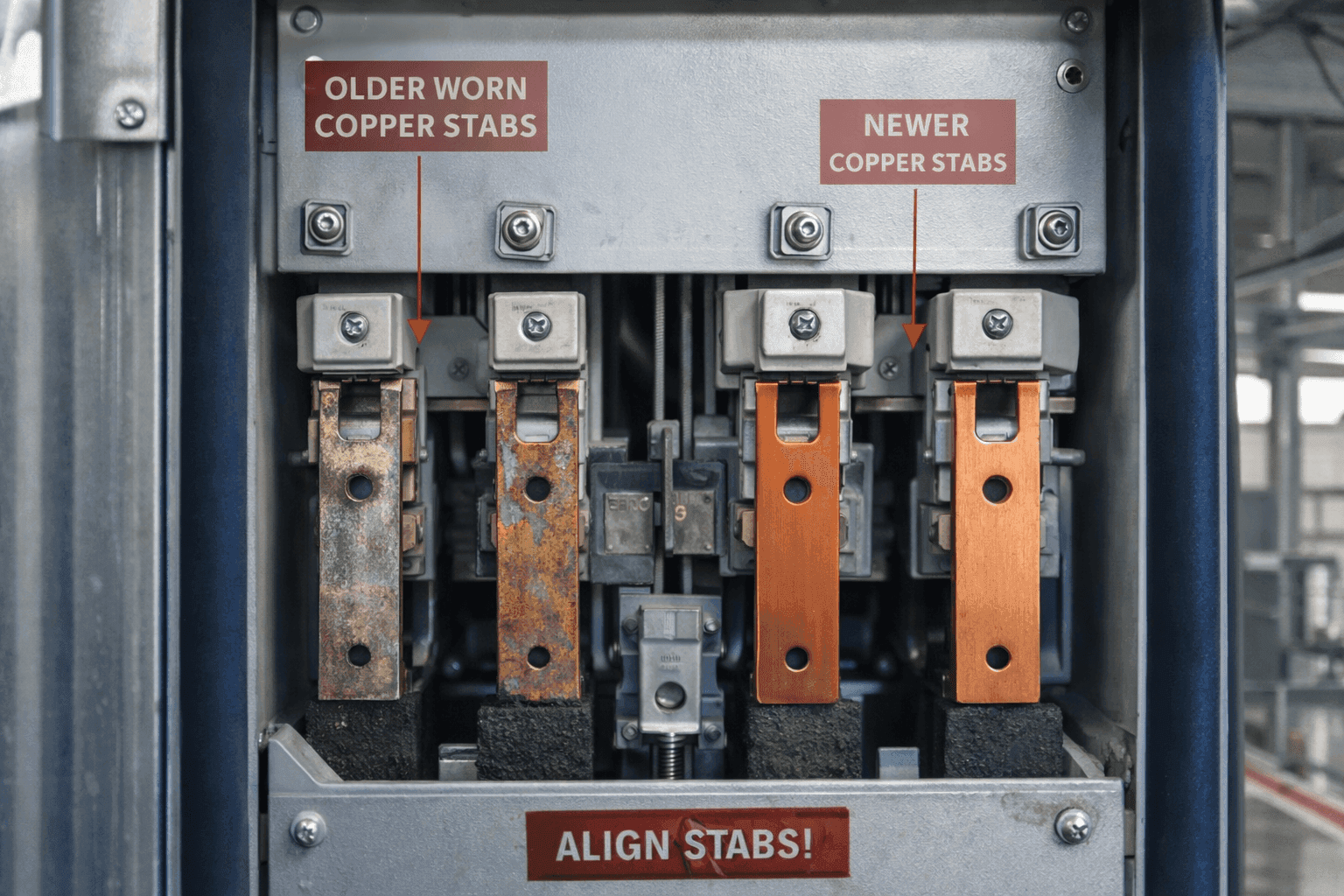
Bus stabs are the metal projections on the back of a bus plug that insert into the energized bus bars of the busway. They are the key point of electrical connection, transferring power from the bus system into the plug unit that feeds downstream equipment. These components must align perfectly with the system’s bus bar layout — both physically and electrically.
Incorrect bus stabs can lead to:
- Poor connection or arcing
- System overload or phase imbalance
- Damage to the plug, busway, or connected load
- Increased risk of fire or injury
That's why understanding the specifics of your system's busway and stab configuration is just as important as the plug itself.
How to Identify the Right Bus Stabs for Replacement
1. Check the Manufacturer and Series
Different busway manufacturers (GE, Square D, etc.) use proprietary stab styles. Look for labels or markings on the existing plug or busway to determine the correct series.
2. Match the Amp Rating
Bus stabs are sized according to ampacity. Replacing a 60A plug with a 100A stab can lead to overheating or mechanical misfit.
3. Confirm the Orientation
Some bus stabs are designed for vertical mounting, others for horizontal. The stab orientation must match the direction your bus bars run.
4. Look at the Phase Configuration
Is it a 3-phase 4-wire system or 3-phase 3-wire? This affects how many stabs are present and where they’re positioned.
5. Use a Trusted Catalog or Support Team
When in doubt, refer to a parts catalog with diagrams or send a photo to a technical team for confirmation.BRAH Electriccan help match your plug to the right stab configuration using theirbus plug product line.
Why Aftermarket Bus Plugs Can Save Time and Cost
OEM bus plugs may no longer be available for legacy systems, and even if they are, lead times and prices can be unreasonable. Aftermarket solutions offer:
- Precise fitfor legacy systems
- Faster deliveryand wider availability
- Warranty-backed replacements— like the2-year coveragefrom BRAH Electric
- Compatibility with discontinued plug types and obsolete stab styles
BRAH Electric specializes in direct-fit replacements for legacy systems, with stab options tailored to a variety of manufacturers and configurations. Their products are engineered to deliver OEM-equivalent performance at a fraction of the cost — all backed by in-house support and quality assurance.
Key Takeaways
- Bus stabs are the electrical lifeline between your bus plug and busway — and choosing the wrong type can compromise safety and performance.
- Always verify the manufacturer, amp rating, orientation, and configuration before selecting a replacement.
- Aftermarket options fromBRAH Electric offer precise stab compatibility for legacy and discontinued systems.
- Use visual inspection, technical data, and expert support to ensure you get the correct part the first time.
- Accurate identification minimizes downtime, prevents damage, and ensures a safe installation process.
FAQs
What are bus stabs on a bus plug?
Bus stabs are the conductive metal prongs that connect the bus plug to the energized busway. They deliver power into the plug and must match the system’s design exactly.
Can I modify bus stabs to fit a different system?
No, modifying bus stabs is unsafe and strongly discouraged. Always use a plug with factory-configured stabs designed for your specific busway model.
How do I know if my bus stab orientation is horizontal or vertical?
Check how your bus bars are positioned within the busway. If they run up and down, it’s a vertical orientation; side to side indicates horizontal.
What if the part number is missing or illegible?
Take high-resolution photos of the existing bus plug and busway, then contactBRAH Electric for help identifying the correct stab configuration.
Are aftermarket bus plugs as reliable as OEM versions?
Yes, as long as they are sourced from reputable manufacturers. BRAH Electric produces direct-fit, warranty-backed bus plugs that match or exceed original specifications.